
Soundings
Our Perspectives and Insights
Your AI Needs a Devil's Advocate
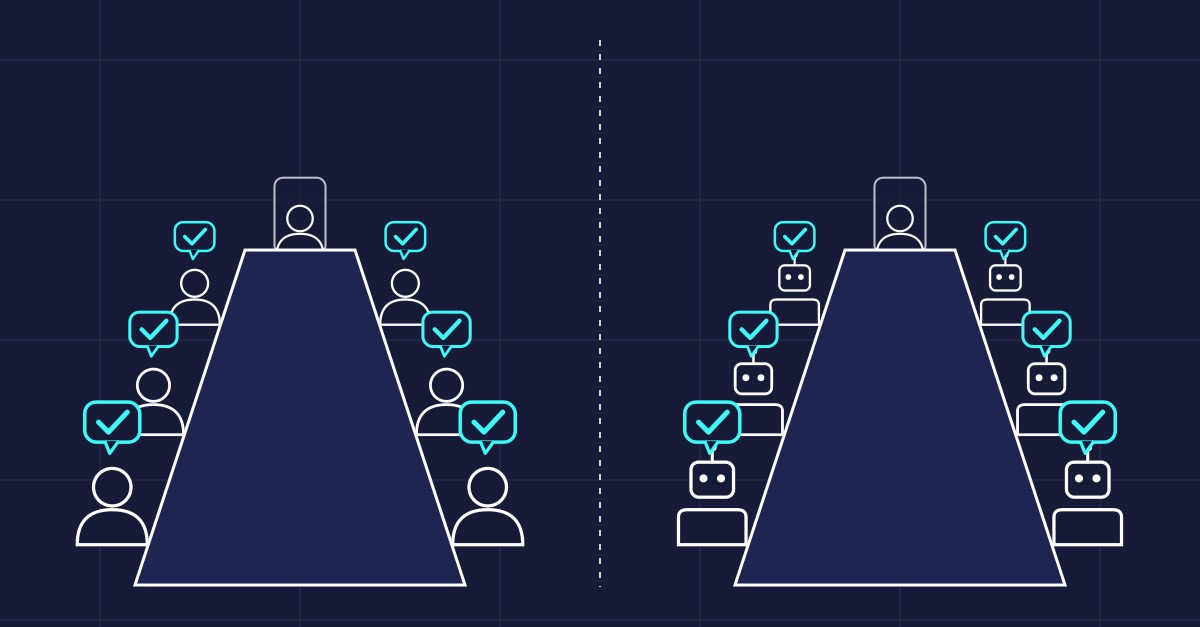
Anti-Pattern #2, the second in a series on using AI the wrong way and finding the way back.
This series turns the usual advice upside down. Instead of the four things to get right, each installment starts with the bad pattern as it shows up in the company, before anyone realizes it’s there, and works back to the fix.
The second one starts somewhere that looks like good leadership: better-prepared decisions.
Early Warning Signs: The Memo That Writes Itself
Picture a company whose leadership team starts using AI to prepare its decisions. Every proposal comes with an AI-built brief: the data pulled, the options laid out, the risks weighed, and a clear recommendation at the end. It’s a good idea, and at first it feels like a huge efficiency gain. Decisions that used to take three meetings take one. Everyone walks in better prepared than they’ve ever been.
The briefs are thorough and they’re confident. They also start to carry more weight than anyone intended.
You’re starting to see the early signs: when the recommendation lands in the decision memo with only light edits, when the meeting that used to debate three options now only reviews one, and when nobody asks what the AI was told, or what it left out.
Symptoms: Signing What Nobody Read
Then even the reading slips. The brief is long, the calendar is full, and the recommendation is right there at the bottom. People stop reading the reasoning and go straight to the answer. Approvals that used to take a discussion take a few minutes.
This is the more common path, and the simpler one. You’ll see it when someone asks a follow-up question about a decision and the owner has to go back to the AI to find out why it was made. The decision has a person’s name on it. The thinking behind it doesn’t.
Full Symptoms: Getting Used to the Lean
Now the problem reaches the careful people too. Some leaders on the team still read every brief. They argue with it, edit it, push back on parts of it. But every option they weigh was framed by the same voice, and over time they get accustomed to its lean.
Every source of advice has a lean. A model gets one from how it was trained, how it was prompted and what it was given to read. When it’s the only voice at the table, that lean stops looking like a lean. It starts looking like common sense.
Look back over this company’s decisions from the last year and the pattern shows. The leadership team has started to sound alike. Their instincts match the brief before they’ve read it. And the company has drifted, one reasonable-sounding recommendation at a time, in a direction nobody remembers choosing.
The decision has a person’s name on it. The thinking behind it doesn’t.
What's Actually Happening Underneath
Leaders have always had soothsayers, advisors who tell them what they want to hear. Now every leader has one on their laptop, and it answers in seconds with sources attached.
Anthropic recently ran a randomized trial on exactly this. Analysts worked through a business decision with an AI agent, and a coin flip secretly set which way the agent leaned on each analysis choice. The analysts went with the agent’s lean 86% of the time, where chance would be about half. Most repeated the agent’s argument, sometimes word for word, and few credited it. None suspected the agent’s leanings had been set for them.
Those were experts on a single task, working for about an hour, with an agent whose preferences had been deliberately strengthened. Your everyday effect is probably smaller. It’s also running every day, on every decision, and nobody is flipping a coin to measure it.
Both paths end in the same place: a leader who believes they made the call, when the AI’s framing made it for them, and who signs it as their own. A human reviewed it. That looks like a control, and it isn’t one.
The Consequences and Costs
The first cost is accountability with nothing behind it. When a decision goes wrong, the person who owns it can’t explain how it was made, because they didn’t really make it.
The second is narrowing. The options that never got considered don’t show up anywhere. A leader who only hears one voice can’t know what that voice left out.
The third is that dissent fades. Once the brief becomes the starting point, disagreeing with it starts to feel like disagreeing with the data. People stop pushing back on the AI, and then they stop pushing back on each other.
And it compounds. A lean accepted once becomes the starting point for the next decision, and the one after that. Each one feels independent. Together they add up to a strategy.
When it’s the only voice at the table, that lean stops looking like a lean.
How Do You Correct It?
Not by keeping AI out of the decision. It’s very good at pulling the data and laying out the case, and you want that. The fix is making sure it’s never the only voice.
- Make the AI argue with itself. Ask for the strongest case for each option, or have a second agent play devil’s advocate against the first. Conflicting opinions on purpose beat one confident answer.
- Put a person in the devil’s advocate seat. Assign someone whose job on this decision is to argue against the AI’s recommendation. Rotate the seat, so dissent is a role and not one person’s reputation.
- Form your view before you read the AI’s. Write down what you’d do, then ask. If your name is on the decision, read the reasoning, not just the recommendation.
The first two fix the lean. The third fixes the rubber stamp.
What the Right Pattern Looks Like
Organizations that cared about getting decisions right have always built dissent in on purpose. For almost four centuries, the Catholic Church kept an official, the Promoter of the Faith, whose job was to argue against every candidate for sainthood: the original devil’s advocate.
In more recent times, Peter Drucker tells a story about Alfred P. Sloan at a meeting of General Motors’ top committee. Sloan asked whether everyone was in complete agreement on the decision in front of them. Everyone nodded. So Sloan proposed they postpone the discussion until the next meeting, to give themselves time to develop disagreement and perhaps understand what the decision was really about.
Sloan wanted agreement that had survived an argument. That’s the pattern with AI too. Use it to inform the call. Make sure something argues back, whether that’s a second agent or a person in the devil’s advocate seat. And keep the decision with someone who can explain it.
I live this one myself. We build our internal agents to purposely have differing opinions, goals, and directions, so they create conflict and disagreement and hand us real options to choose from. Then we make business decisions from those different directions. And we specifically watch for consensus collapse. When every agent agrees on the same thing, that’s what makes us pause.
The Bottom Line
None of this is new. It’s an old business problem. An executive or an owner who only listens to one person ends up with that person’s biases, and every company has seen it: the trusted advisor who always gets the last word, the leadership team that agrees with the founder on everything.
AI just gives every leader that advisor, on every decision, at any hour. Sloan’s move still works: when everyone at the table agrees, including the AI, take the time to develop some disagreement. Give your AI a devil’s advocate, and only sign the decisions you can explain.
A Pilot & Rutter principle.