
Soundings
Our Perspectives and Insights
Your AI Meeting Notes Are Making Decisions Nobody Made
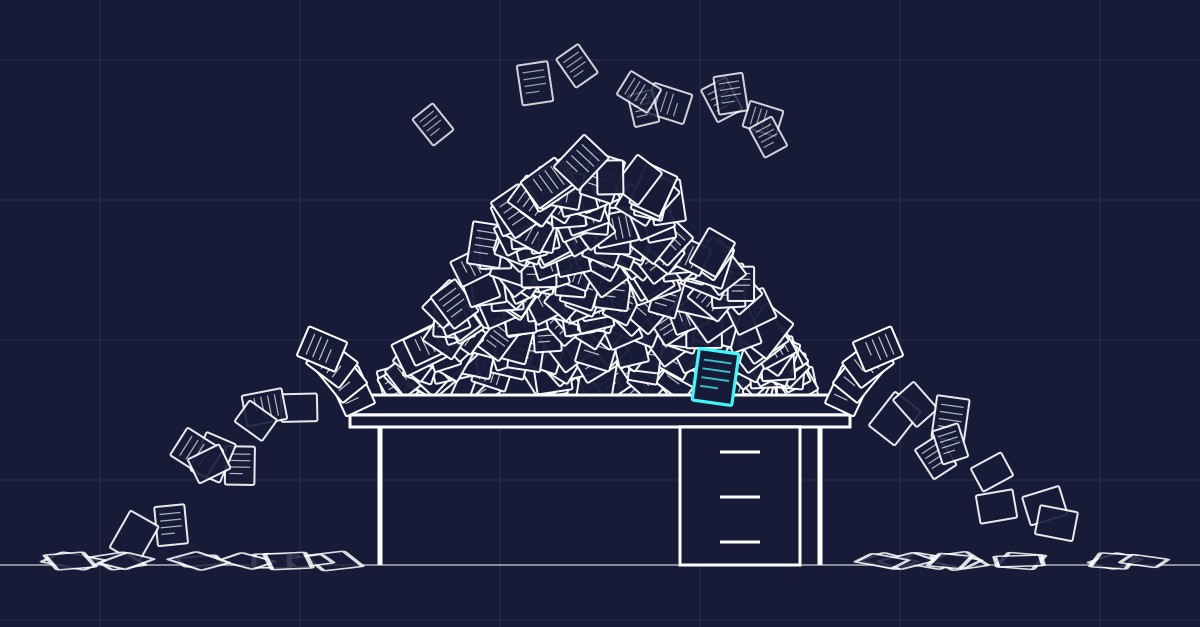
Anti-Pattern #1, the first in a series on using AI the wrong way and finding the way back.
I’ve always admired Charlie Munger’s habit of turning a problem upside down. In a 1986 commencement talk at the Harvard School, he credited the mathematician Carl Jacobi with a phrase Jacobi repeated constantly: “Invert, always invert.” Munger’s reason was simple: “many hard problems are best solved only when they are addressed backward.”
Most of what gets written about AI runs forward, including plenty of what I’ve written here: do these four things and you’ll get it right. But AI is new, and we’re going to get it wrong. Since we’ll see the symptoms first, AI may be the best invitation to invert we’ve ever had. So this series starts from the other end, with the bad pattern as it shows up in the room, before anyone realizes it’s there.
The first one starts somewhere harmless: meeting notes.
Early Warning Signs: The Notes Nobody Reads
Picture a company that starts using AI to take its meeting notes. It’s a good idea, and at first it feels like a huge efficiency gain. Every meeting comes back with a full record: who was there, every point of the discussion, every action item anyone mentioned, every decision made. Three or four pages, sometimes more, waiting in your inbox before you’re back at your desk.
The notes are detailed and they’re thorough. They’re also hard to read, harder to digest, and close to impossible to check against what actually happened. People silently stop opening them.
You’re seeing the early signs when the notes run longer than the meeting felt, when nobody ever replies with a correction, and when you can’t remember the last time someone quoted them.
Symptoms: Action Items That Go Nowhere
Then the follow-through slips. Action items sit in the notes and don’t get done, because nobody read far enough to find their own name. Meetings start rehashing points that were settled two weeks ago, because the decision is buried on page three of a document nobody opened.
That’s the irony of this stage. The company has more documentation than it has ever had, and less shared memory.
Full Symptoms: The Deck Nobody Agreed To
Now people get ambitious. After a 30 or 60 minute meeting, attendees hand the transcript to AI and come back with a full presentation: 20 slides or more, capturing every decision and discussion point. Nobody reviews it. Then it becomes the input for the next round of AI work (the requirements document, the roadmap, the plan) as if everything on those slides had been decided.
With multiple people at the meeting, put each of their decks side by side and the problem shows. Several people sat in the same meeting and walked out with decks that don’t agree on what the meeting was about. Each one reads like a confident record. Each one is feeding forward into more work. All of them drift in different directions from the meeting.
More documentation than it has ever had, and less shared memory.
What's Actually Happening Underneath
AI scaled the output and everyone’s attention stayed the same. There are no extra minutes in the day.
Review capacity is attention capacity, and attention is the one thing that doesn’t scale with generation. I wrote that AI moved the software bottleneck from building to reading. Meetings work the same way: the bottleneck moved from capturing to reading.
But the failure isn’t that nobody read the notes. Not every AI output is going to be read, and that’s fine. Someone can decide that a given artifact won’t get a line-by-line review and accept what that means, including the risk that an error in it compounds once more work is built on top. The failure is that nobody made that call. At this company, nobody had even looked at it and seen it as a possibility.
An artifact nobody reads doesn’t stay neutral. It quietly turns into a decision nobody made.
The Consequences and Costs
The first cost is rework. A team builds on a “decision” that was only a point of discussion, and weeks later somebody has to unwind it.
The second is misalignment that looks like alignment. Everyone has a document, so everyone believes they’re on the same page. They’re on different pages of different decks.
The third is compounding. When AI builds on unreviewed AI, each layer adds confidence without adding accuracy, and the original error gets harder to find the further it travels. And the meetings that get rehashed are meetings you pay for twice.
How Do You Correct It?
Not by reading everything. A rule that every AI artifact gets a full review just moves the bottleneck back to where it was and guarantees the rule gets ignored. Three fixes do the work instead.
- Name a responsible owner. Every meeting artifact has one person accountable for the outcome it records, who knows, or can detect, when it drifts and can correct it. They might read it or catch it some other way, but nobody gets to fire and forget.
- Fit the output to the attention window. This is often overlooked. Four pages capturing every point of discussion gets skimmed, while a short list of decisions and a short list of action items gets read, corrected and agreed to. Tailor the prompt so the response conforms to what attention you’ll give it.
- Close the loop, at the right weight. Project Management 101. Open each meeting with the last one’s decisions and action items, so they get done instead of rehashed. When an AI capture feeds forward, label it as a capture that may or may not be right, not as a record of decisions.
That last point matters more than it looks. The same document carries a completely different weight depending on what you call it.
An artifact nobody reads doesn’t stay neutral. It quietly turns into a decision nobody made.
What the Right Pattern Looks Like
I live this one myself. We run parts of our own operation on AI agents, and I don’t read every decision they make. That isn’t blind faith. Trust, validation, verification and assurance came first, before I ever stopped reading line by line.
I still watch the high level. When it starts to drift outside where it should be, that’s my signal to dive into the details, and it’s usually one or two things that slipped.
That’s the pattern: oversight by exception, not by exhaustion. Someone owns the outcome, the output fits what they can actually absorb, and the work comes back to the table carrying the weight it has earned.
The Bottom Line
None of this is new. Action items nobody followed up on, decisions nobody logged that got argued all over again: every company had that problem long before AI. AI mostly hands us our old problems at increased pace.
The speed is the difference. An unread meeting note used to just sit there. Now it becomes the input to the next ten documents or builds. Somebody has to own what comes out of the room, or the room’s decisions will be made by what nobody read.
A Pilot & Rutter principle.