
Soundings
Our Perspectives and Insights
When You Buy an AI Company, You're Buying the Climb
I love how AI is rewriting the known equations of business. Formulas we’ve trusted for decades are changing in front of us, and acquisitions are one of the clearest places to watch it happen.
For most of my career, the weight in an acquisition sat on the asset: the product, the customer base, the revenue stream. Sometimes it sat on the people. A moat protected what you bought, and you hired or kept people for a specific product, which protected it too. You paid for what the company had, and time was on your side.
With AI, time is not on your side. The product you just bought can be matched by a frontier model update or an AI-native competitor in months. The revenue it earns today can be taken by someone who does the same work for a fraction of the cost. And a moat erodes quickly unless something keeps replenishing it.
So the thing you’re really buying is what the people will build two or three years from now. The product is where they are today. The people are where you’ll be in two years.
A moat erodes quickly unless something keeps replenishing it.
Why Time Stopped Working for the Buyer
Jeff Bezos described the alternative in his 2016 letter to shareholders, explaining why Amazon tries to stay a Day 1 company: “Day 2 is stasis. Followed by irrelevance. Followed by excruciating, painful decline. Followed by death.” He also noted that the decline happens in extreme slow motion, and an established company can harvest Day 2 for decades.
The sequence is still correct, but the speed has greatly changed. With AI, nobody’s going to get decades. Stasis, irrelevance and decline can play out between closing the deal and the next budget cycle.
That changes the math on everything you used to pay for. A product’s value now has a much shorter half-life. A customer base can be pulled away by a cheaper, AI-native alternative. What lasts even more now is the ability to keep producing the next thing.
With AI, nobody’s going to get decades.
You're Buying the Climb
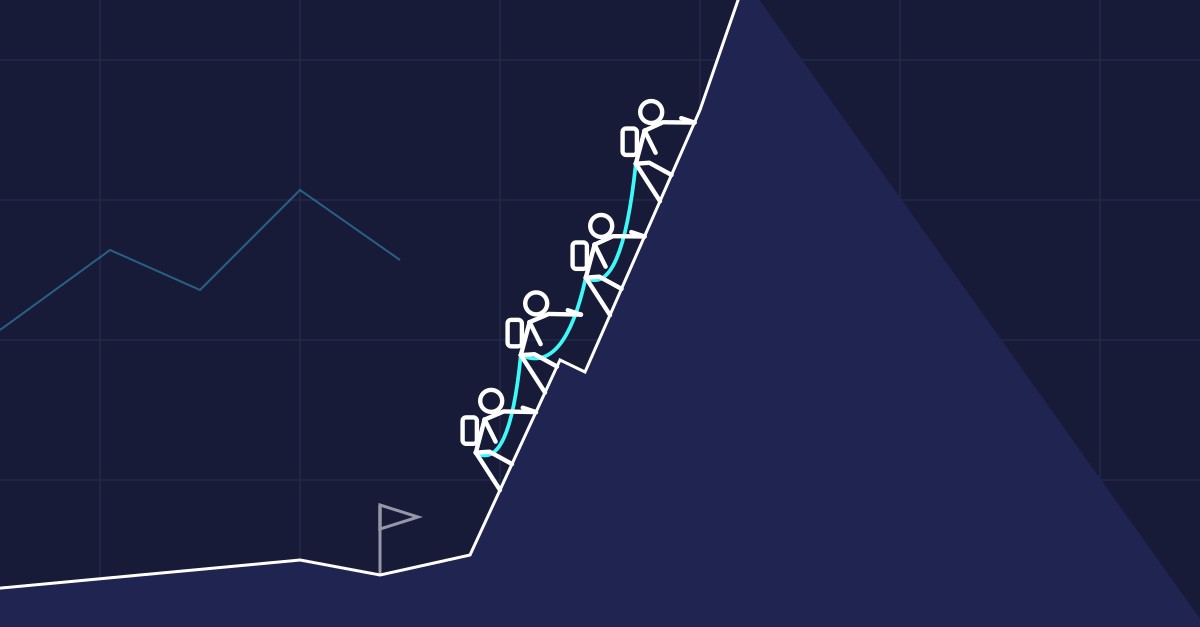
Think of the team you’re acquiring as climbers.
A product is a hold. It’s where the team got to, and it may be a very good hold. But in AI the wall keeps moving. A team that made one big move, grabbed one hold and stayed there is now stuck. What you want is a team that keeps climbing at the rate AI demands, which is relentless.
Climbing has a second lesson. A climber who makes a big, precarious jump might reach a hold faster than anyone else, but takes on outsized risk. When it goes wrong, really bad things happen. You want people who climb fast and climb safely: protection placed, every move tested, and no leap that bets the whole route.
That can sound like an acqui-hire, and it’s different. In an acqui-hire, a buyer pays for the talent and shuts down the product. Even when you believe you’re buying the product, in AI you’re really buying the team’s rate of climb, not just the team.
What Should You Look For in the People?
Look for the people who can keep accelerating and pushing the edge, and who can navigate the change as it happens. AI’s jagged edge goes all over the place. Use cases are being invented as we go, and roles are shifting under people’s feet. The team worth buying handles that well. Four important things to look for:
- They adapt when the edge moves. Ask what they built a year ago and what they’ve thrown away since. A team still defending its first architecture is holding on to one hold.
- They invent, not just execute. Look for people who found the problem before the market identified it. A team that only ships against a spec will wait for the next spec.
- They accelerate. Measure the rate, not the position. How fast did their second product follow the first, and their third follow the second?
- They climb safely. Speed without protection is the precarious jump. Look for testing, validation and a named owner for what each system does before it ships.
What It Changes in the Deal
If the people are the asset, the deal has to treat them that way. Diligence spends more time with the team than with the code. Retention for the key people stops being a detail worked out in the last week and becomes part of the thesis, because you need them for the next two or three years, staying at the cutting edge and building the next products.
Integration has to protect how they work. The fastest way to lose a climbing team is to make them stop climbing and start filling out forms and looking for the way down.
The Bottom Line
In AI, the product is a hold, the moat is temporary, and time works for whoever moves next. When you buy an AI-powered company, buy the climbers: people who adapt, invent and accelerate, and who place protection on the way up.
Everything else you bought is where they’ve been.
A Pilot & Rutter principle.